 blog
Best Paint for Bathroom Walls: A Finish and Moisture Guide
Last Updated: November 13, 2026
Quick Summary
Satin is the best default finish for bathroom walls and ceilings because it resists moisture and wipes clean without looking glossy. Choose semi-gloss for trim, doors, and heavily used surfaces where scrubbing clean matters most. Use a 100% acrylic latex labeled for kitchens and baths, applied over a matched primer.
- Semi-gloss scrubs clean more easily but shows every bump on the wall.
- Use 100% acrylic for shower-adjacent walls; vinyl-acrylic suits powder rooms and low-use baths.
- Run the exhaust fan during every shower and for 20 to 30 minutes after.
- No paint prevents mold on its own; mildewcide additives only slow growth on the film.
- Southern Perfection Painting Inc. has 42 years of experience and delivers itemized quotes within 48 hours.
Table of Contents
- Best Paint for Bathroom Walls and Ceiling: Satin vs. Semi-Gloss
- Moisture-Resistant Paint for Bathrooms: What Actually Works
- Best Paint for Bathroom Walls to Prevent Mold
- Get a Free Estimate Before You Pick a Sheen
- Frequently Asked Questions
Best Paint for Bathroom Walls and Ceiling: Satin vs. Semi-Gloss
Choosing the best paint for bathroom walls comes down to one decision: the sheen. Satin is the better default for most bathroom walls and ceilings because it resists moisture and wipes clean without looking glossy, while semi-gloss suits trim, doors, and heavily used surfaces where stain resistance matters most.
Satin hides wall imperfections and reads softer under bathroom lighting; semi-gloss shows every bump but scrubs clean more easily.
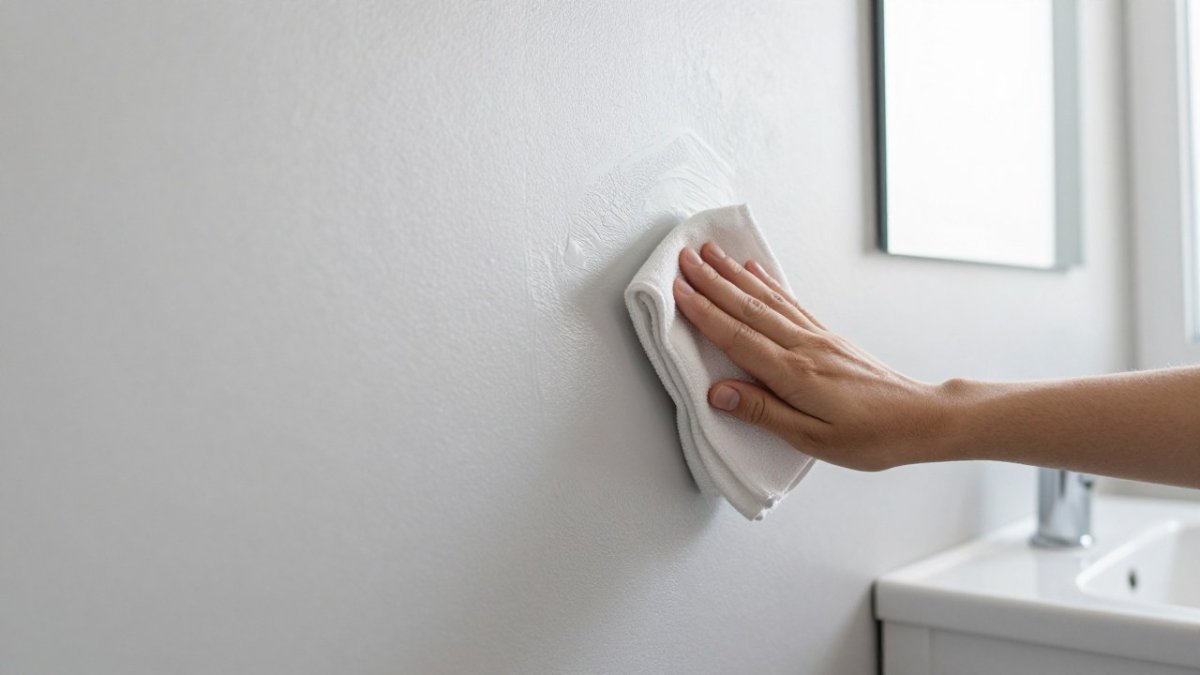
A paint industry expert notes the practical side of that choice:
"We recommend using a satin or semi-gloss finish in bathrooms since they are more stain-resistant and easier to clean."
For the full breakdown of finishes beyond these two, see our guide to the 5 types of paint sheen.
Here is how the two recommended sheens compare for bathroom surfaces.
| Sheen | Best for | Key difference |
|---|---|---|
| Satin | Most bathroom walls and ceilings | Resists moisture, wipes clean, hides imperfections |
| Semi-gloss | Trim, doors, heavily used surfaces | Scrubs clean more easily but shows every bump |
Moisture-Resistant Paint for Bathrooms: What Actually Works
What works is a 100% acrylic latex labeled for kitchens and baths, applied over a primer matched to the surface. Three variables matter: the binder (acrylic beats vinyl-acrylic and styrene-acrylic for adhesion under steam), the sheen (satin or semi-gloss, never flat), and the prep. Adhesion fails when walls are dirty, damp, or unprimed, showing up as peeling and cracking rather than a paint defect.
Use this selection checklist before you buy:
- Binder: 100% acrylic for shower-adjacent walls and ceilings; vinyl-acrylic is fine for powder rooms and low-use baths.
- Sheen: satin on main walls and ceilings, semi-gloss on trim, doors, and the wall band inside the shower enclosure.
- Mildewcide label: a mildew-resistant coating slows growth on the film but does not replace ventilation.
- VOC level: low-VOC and zero-VOC interior paints reduce odor and let you repaint with the fan running and the window open.
- Primer: a stain-blocking or moisture-resistant primer on bare drywall, patched areas, and any wall that previously held flat paint.
Surface matters as much as product. Shower-adjacent walls take the most direct steam and need the highest acrylic content and a satin-to-semi-gloss sheen. Trim, doors, and the vanity surround want semi-gloss for scrubbing. Powder rooms and half-baths see far less moisture and can take a satin acrylic without the premium binder. Treating all four surfaces the same is the most common specification error.
A common mistake is painting over a moisture problem instead of fixing it. If paint is cracking or blistering, the source is usually behind the wall, not in the can. Skipping primer on a bare or patched wall is the fastest way to a finish that lifts within a season.
Estimate quantity before you commit. Coverage varies by product and surface, so check the coverage figure on the can and measure the room's wall and ceiling area before buying. Rough or patched walls absorb more paint. For current prices, pricing depends on the product, quantity, and delivery; visit the Southern Perfection Painting Inc. website for current pricing or a quote.
Older bathrooms are where this problem shows up most often, after years of steam have worked under the old coating. For the causes and fixes, read why paint cracks.
Best Paint for Bathroom Walls to Prevent Mold
No paint prevents mold on its own. Mildew-resistant additives slow growth on the paint film, but mold needs moisture, and the fix is ventilation and moisture control, not a premium can. That distinction separates a repaint that lasts from one that blooms again in a season.
Start with the moisture source. A bathroom that fogs the mirror within a minute of a hot shower points to an undersized or short-cycled exhaust fan rather than a paint problem. Run the fan during every shower and for 20 to 30 minutes after, and confirm it moves air, a tissue held to the grille should stay put. Fix dripping supply lines, failed caulk at the tub and shower, and roof or window leaks before repainting; paint over an active leak will blister and peel regardless of sheen.
Once the moisture source is handled, a satin or semi-gloss acrylic with a mildewcide label resists staining and cleans up without scrubbing the coating off. Flat paint in a wet room traps moisture and marks easily. For indoor air, choose a low-VOC or zero-VOC interior acrylic, keep the exhaust fan running and a window open during application, and allow the full recoat window on the label before daily shower use resumes.
Watch out: painting over visible mold without killing and removing it first seals the spores under the film and guarantees a return.
If you are already seeing growth, our guide to dealing with mold and mildew on bathroom walls covers the cleanup and prep steps before a repaint.
Get a Free Estimate Before You Pick a Sheen
Picking the right sheen is straightforward once you know the room. The harder part is surface prep, priming, and applying it so the finish holds up to steam year after year.
Southern Perfection Painting Inc. has 42 years of experience, uses premium paints from Sherwin-Williams and Benjamin Moore, and backs every project with a written workmanship warranty. Our crews are trained W-2 employees, never subcontractors, and we deliver itemized quotes within 48 hours.
Before you hire anyone, read how many estimates to get, then see what our interior painting service includes and request a free estimate.
A bathroom repaint fails for reasons that have nothing to do with the color you chose: poor prep, the wrong sheen, or a moisture source nobody addressed. Getting it right the first time saves you a second project. Southern Perfection Painting Inc. handles the prep, the primer, and the finish with premium products and a written workmanship warranty, so the result holds up to daily steam. Get started with Southern Perfection Painting Inc. and get a free, no-obligation estimate for your bathroom.
Frequently Asked Questions
What kind of paint is best for humid bathrooms?
A water-based acrylic paint in a satin or semi-gloss finish holds up best in humid bathrooms. Satin gives a soft sheen and good washability for walls, while semi-gloss offers the most stain resistance and is easy to wipe down. Paint industry guidance commonly recommends satin or semi-gloss in bathrooms because those finishes resist stains and clean up more easily. Pair the finish with a working exhaust fan to keep humidity under control.
Should bathroom walls be eggshell or satin?
Satin is the safer choice for bathroom walls. Eggshell has less sheen and a flatter look, but it does not wipe clean as easily when soap scum, toothpaste, or condensation marks build up. Satin gives you a wipe-clean surface without the high shine of semi-gloss. If the room has a strong exhaust fan and little direct water exposure, eggshell can work on lower walls, but satin is the more durable finish for high-moisture areas.
Do bathrooms require a special paint?
Not always. A quality water-based acrylic in satin or semi-gloss handles most bathroom walls well. Specialty bathroom paints add mildew resistance and extra moisture protection, which helps in rooms with poor ventilation or frequent steam. The bigger factor is surface preparation and primer, plus running the exhaust fan during and after showers. If you repaint a bathroom that had mold, clean and treat the wall first so the new paint adheres properly.