 How-to
How to Prepare Siding for Exterior Painting the Right Way
Last Updated: November 21, 2026
Quick Summary
To prepare siding for exterior painting, follow a fixed order: inspect for peeling paint and soft wood, wash with a soap-based solution and rinse, then let it dry at least 24 to 48 hours. After that, scrape loose paint, sand transitions smooth, caulk gaps, repair or replace unsound wood, and prime all bare wood.
- Walk the house with a notepad and mark peeling paint, cracked caulk, gaps, and soft spots.
- Sherwin-Williams recommends letting the house dry at least 24 to 48 hours before painting.
- Scrape loose paint to bare wood, then sand rough edges so transitions feel smooth.
- Probe boards with a screwdriver; if the tip sinks in easily, that section must be replaced.
- Exterior paint needs a dry window of at least 24 hours before rain.
Table of Contents
- Tools and Materials You Need Before You Start
- How to Prep a House for Painting Exterior: The Step-by-Step Sequence
- How to Paint House Exterior Wood Siding: Matching Prep to the Material
- How Long for Exterior Paint to Dry Before Rain
- How to Paint a House Exterior With a Brush: Prep That Makes It Work
- Lead Paint, Pressure-Washing Risks, and Safety on the Job
- Quality-Control Checklist: Confirm the Siding Is Ready for Paint
- Get a Free Estimate Before You Pick Up a Scraper
- Frequently Asked Questions
Tools and Materials You Need Before You Start
Knowing how to prepare siding for exterior painting is the foundation of a finish that lasts, and the right tools make every step faster and safer. The tool list for prepping a home for exterior painting rarely changes.
Here is what you need on hand before you climb a ladder:
- Pull-style paint scraper with a sharp blade
- Sanding block or orbital sander with 80- and 120-grit paper
- Stiff-bristle brush and a soap-based wash
- Pressure washer or garden hose with a nozzle
- Exterior-grade caulk and a caulking gun
- Wood filler or epoxy for rotted spots
- Primer rated for exterior wood
- Dust mask, safety glasses, and work gloves
- Protective tarps for plants and flatwork
- Sturdy ladder or scaffold, set on level ground
A common mistake is buying cheap scrapers that dull in minutes. A sharp pull-style scraper does most of the heavy lifting, so buy two and swap blades as you go.
How to Prep a House for Painting Exterior: The Step-by-Step Sequence
Learning how to prep a house for painting exterior comes down to a fixed order: inspect, wash, dry, scrape, sand, repair, and prime. Skip a step and the paint will tell on you within a season or two.
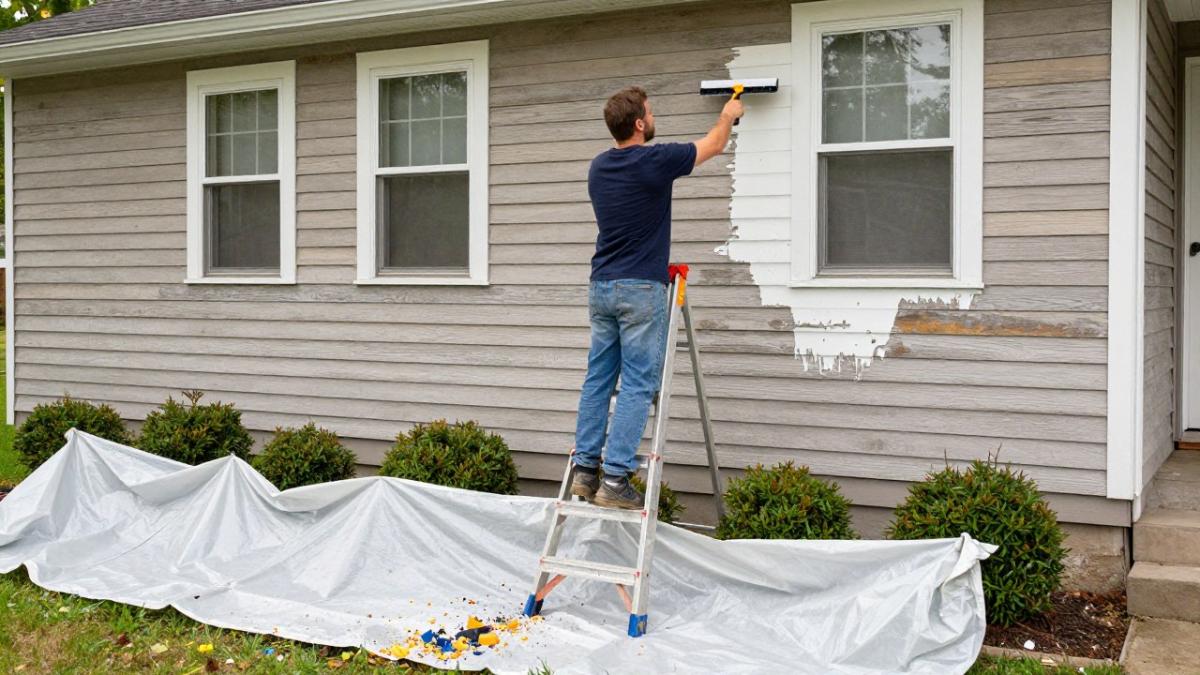
Below, we walk through each stage in the order our crews follow on every job.
Step 1: Inspect Siding for Peeling Paint, Gaps, and Unsound Wood
Walk the whole house with a notepad and mark every problem area. Look for peeling paint, cracked caulk lines, gaps at trim joints, and soft spots that give when you press a screwdriver into the wood. Probe any suspicious board at the base and around windows. Note what you find so you can repair before you prime.
Step 2: Wash Siding and Remove Loose Paint
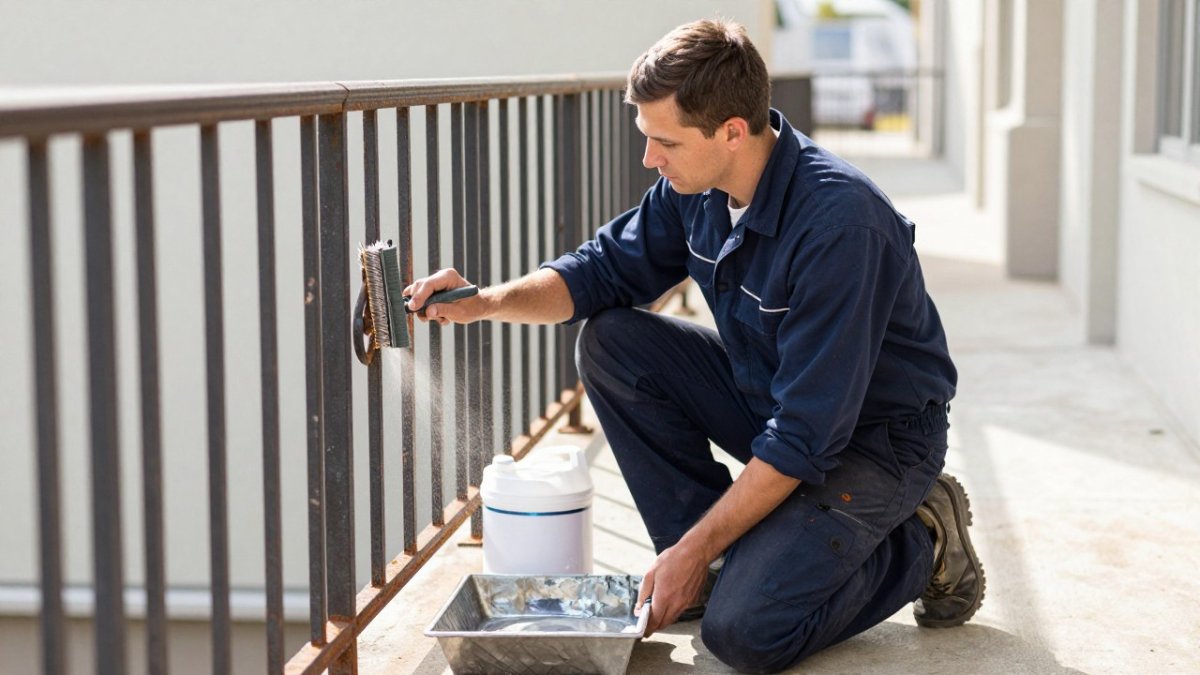
Washing removes dirt, mildew, and chalky residue that block paint adhesion. A soap-based wash followed by a thorough rinse is the standard approach, and Sherwin-Williams recommends letting the house dry at least 24 to 48 hours before painting. Watch out: pressure washing at high settings can force water behind siding and strip soft wood. Keep the nozzle moving and use a fan tip.
Step 3: Scrape, Sand, and Repair Surface Defects
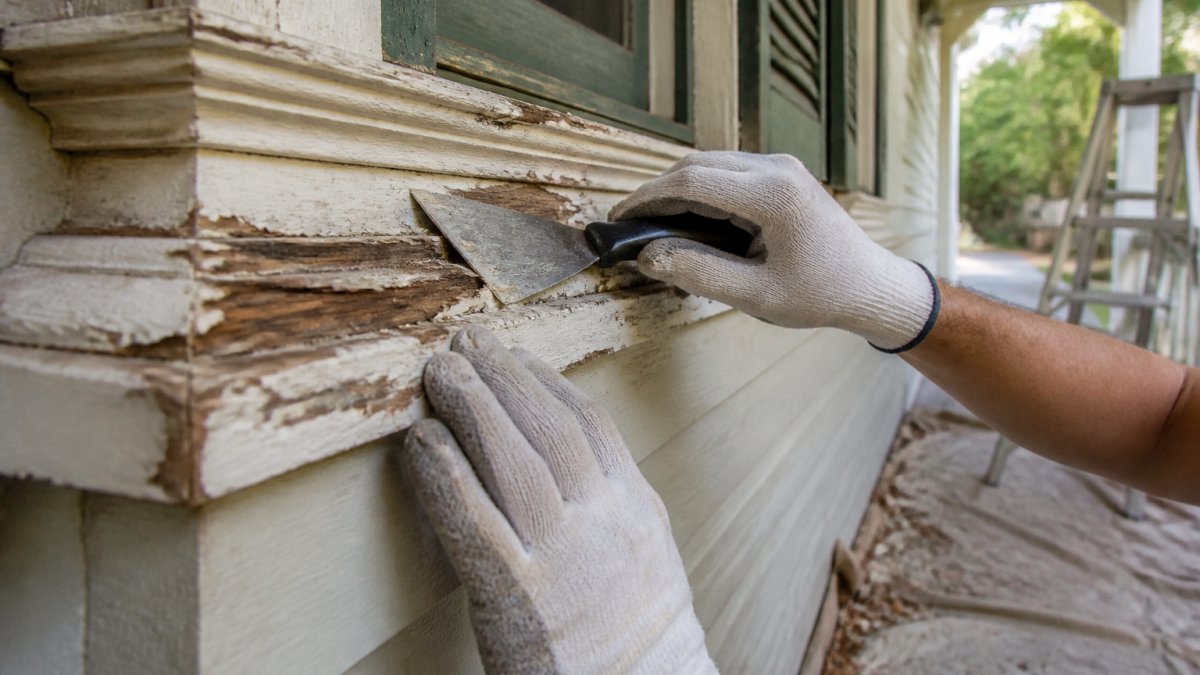
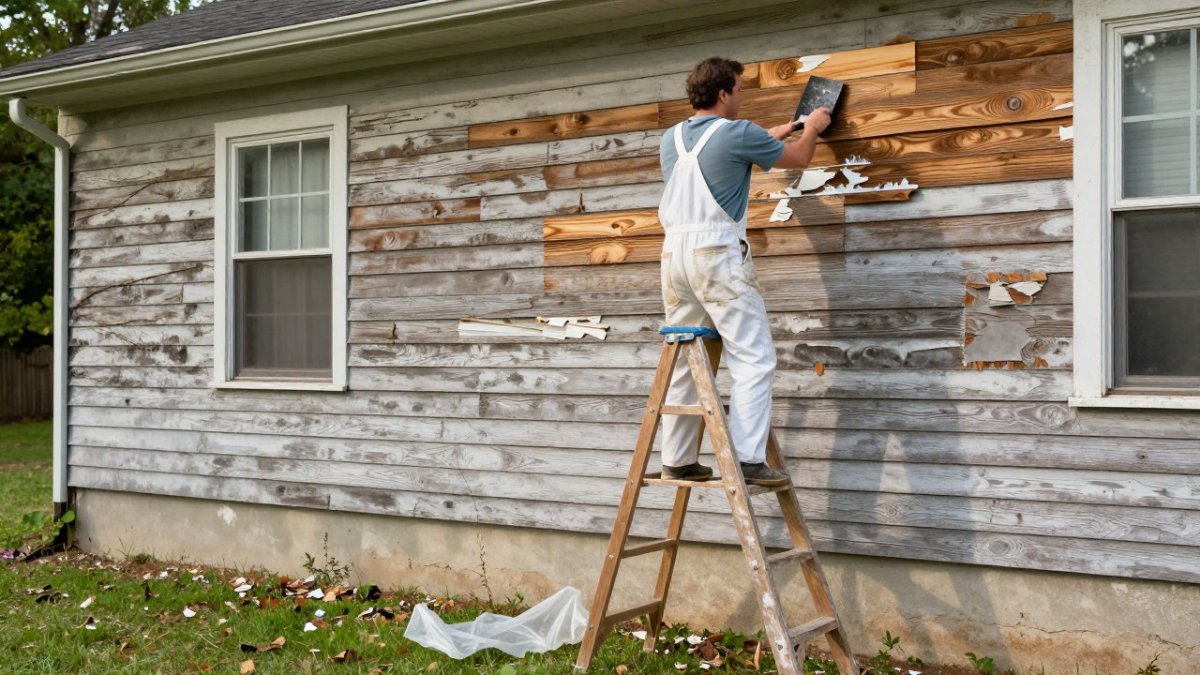
Scrape all loose and peeling paint down to bare wood, then sand the rough edges so the transition between old paint and bare wood feels smooth. Fill gaps and holes with exterior caulk, and repair damaged wood with filler or replacement boards. For rotted trim or deck boards, our carpentry and wood repair team can handle the structural fixes before painting begins.
Here is the fixed order our crews follow on every exterior prep job.
| Step | What to do |
|---|---|
| 1. Inspect | Mark peeling paint, cracked caulk, gaps, and soft wood |
| 2. Wash | Soap-based wash and rinse; dry 24 to 48 hours |
| 3. Scrape, sand, repair | Remove loose paint, smooth edges, caulk, fill or replace wood |
How to Paint House Exterior Wood Siding: Matching Prep to the Material
Wood siding needs the most careful prep of any exterior surface. It absorbs moisture, expands in heat, and holds onto old paint unevenly, so scraping, sanding, and priming matter more here than anywhere else. Probe every board at the base and around windows with a screwdriver; if the tip sinks in easily, that section is unsound and must be replaced, not painted.
Fiber cement siding behaves differently. It is dimensionally stable and does not rot like wood, but it holds chalk and dirt tightly and can wick moisture at cut edges. Wash it with a soap-based solution and a stiff brush, rinse thoroughly, and let it dry completely. Prime any bare or sanded spots with a primer recommended by the siding manufacturer, and caulk joints with a paintable sealant.
Vinyl siding requires the gentlest prep of all. There is no scraping and no sanding of the siding itself. Wash with a soft brush and a mild soap solution, rinse, and let it dry. Our guide on painting vinyl siding the right way covers the never-go-darker rule that protects siding in hot climates.
Stucco and brick mostly need cleaning and patching, not scraping. Remove efflorescence and mildew with a soap-based wash and a stiff brush, rinse, and let the surface dry. Patch cracks wider than a hairline with a patching compound rated for exterior masonry, and prime bare patches with a masonry primer before painting.
Engineered wood siding, such as hardboard and oriented-strand-board products, is the most moisture-sensitive material on this list. Any swollen, crumbly, or delaminated section cannot be repaired with filler and must be replaced. Scrape loose paint gently, sand edges smooth, and prime every bare spot and cut edge with a primer approved by the manufacturer.
Match your method to the material before you pick up a tool. The wrong method on the wrong substrate does more damage than no prep at all.
How Long for Exterior Paint to Dry Before Rain
Exterior paint needs a dry window of at least 24 hours before rain, and longer in cool or humid conditions. Most acrylic exterior paints skin over in a few hours but stay soft underneath, so a hard rain too soon can pit the surface or wash it unevenly.
Check the forecast before you start, and plan around humidity as much as rain. Morning dew counts too. Painting late in the day leaves fresh paint exposed to overnight moisture. If rain is likely within 24 hours, wait.
How to Paint a House Exterior With a Brush: Prep That Makes It Work
Brushing rewards the effort to prepare siding more than any other method. A brush pushes paint into cracks and along lap lines where a sprayer can miss, but it will also catch on every rough edge you failed to sand.
Sand all transitions smooth, prime bare wood, and caulk every gap before the first stroke. Then work top to bottom, one siding course at a time, and keep a wet edge so lap marks do not set. The finish looks better and holds longer when the surface underneath is sound.
Lead Paint, Pressure-Washing Risks, and Safety on the Job
Homes built before 1978 may carry lead paint, and scraping or sanding those surfaces releases dust you do not want to breathe or track into the house (the EPA). Test before you scrape if your home is that old; hardware stores sell swab test kits, and a certified inspector can confirm. If lead is present, follow EPA lead-safe renovation guidance for containment and disposal. That means sealing doorways and windows with plastic, laying heavy tarps to catch every chip, wearing a respirator rated for lead dust rather than a simple dust mask, and bagging debris for proper disposal rather than sweeping it into the yard.
Pressure washing is the other place prep goes wrong. High pressure forces water behind siding, erodes soft wood, and can etch fiber cement. A fan tip held at a distance from the surface, at a pressure low enough to lift dirt without raising the grain, is the safer approach. Work from the top down and keep the nozzle moving. Hand washing with a garden hose, a stiff brush, and a soap-based solution is preferable for soft or aged wood, for any area with failing caulk, and for fiber cement. Never aim a pressure washer upward under lap siding.
Weather and humidity decide whether the prep holds. Wash on a day when the siding can dry for at least 24 to 48 hours before painting, and check the forecast for rain within that window. Cool, humid, or shaded conditions stretch drying time; a moisture meter takes the guesswork out of it. Wood siding should be dry before priming, and morning dew counts as moisture. Prime and paint only when the surface is dry and the temperature is within the range printed on the paint label.
Wear a dust mask and safety glasses, and lay tarps to catch paint chips before they hit the soil. Keep ladders on level ground and never overreach. Set up a scaffold for two-story work rather than stretching from a ladder.
Quality-Control Checklist: Confirm the Siding Is Ready for Paint
Run this checklist before any paint goes on. Every box should be checked.
- All loose and peeling paint removed
- Surface sanded smooth at every transition
- Gaps and holes caulked and cured
- Rotted wood repaired or replaced
- Siding washed and fully dry
- Mildew removed, not just painted over
- Bare wood primed
- Rain unlikely for 24 hours
If any box is unchecked, fix it first. Paint over a defect and you will be scraping it again next year.
Get a Free Estimate Before You Pick Up a Scraper
Prep work at height is where most exterior paint jobs fail, and it is also the hardest part to do safely on your own. If the scraping, sanding, and repair list looks long, hand it to a crew that does this daily.
Southern Perfection Painting Inc. uses trained W-2 employees, never subcontractors, and premium paints from Sherwin-Williams and Benjamin Moore. Every project comes with a written workmanship warranty, and we deliver detailed, itemized quotes within 48 hours. Read our guide to residential painting contractors to see what a thorough job should include, then request a detailed long-form estimate for your home.
The difference between a paint job that lasts ten years and one that peels in two is almost always the prep. Southern Perfection Painting Inc. brings 42 years of experience, premium Sherwin-Williams and Benjamin Moore paints, and a written workmanship warranty to every exterior project. Get started with Southern Perfection Painting Inc. and a free, no-obligation estimate.
Frequently Asked Questions
How long should siding dry after washing before painting?
Paint manufacturers generally advise letting the house dry at least 24 to 48 hours after pressure-washing before painting. In humid conditions or on shaded sides of the house, allow extra time. Check for moisture by pressing a dry paper towel against the siding in a few spots; if it comes away damp, keep waiting. Painting over trapped moisture is one of the fastest ways to get blistering and peeling paint within a season.
Do you have to prime exterior siding before painting?
Not always, but bare wood, repaired patches, and any area where you sanded down to raw material should be primed. Primer seals the wood so the topcoat bonds evenly and doesn't soak in unevenly. If the existing coating is sound and you are recoating with the same type of paint, a primer may not be required. Spot-prime exposed wood and filled areas, then paint within the window the primer manufacturer specifies.
What tools do you need to prepare siding for painting?
A basic kit includes a pull-style paint scraper, sandpaper or a sanding block, a stiff brush, a pressure washer or garden hose with a soap-based wash, caulk and a caulking gun, exterior wood filler, a dust mask, safety glasses, protective tarps, and a ladder or scaffold. Add a moisture meter if you want an objective read on whether the wood is dry enough. Have primer on hand for bare wood and repairs.
Should I wash the outside of my house before painting?
Yes. Dirt, mildew, and chalky residue block paint adhesion, so washing is a required step, not a cosmetic one. Use a soap-based wash and rinse thoroughly, then let the siding dry for at least 24 to 48 hours. Keep the pressure moderate: too much force on wood siding can drive water behind the boards and damage the surface you are trying to protect.