 How-to
How to Repaint Metal Railings Without Rust Showing
Last Updated: November 20, 2026
Quick Summary
To repaint metal railings without rust showing, remove all loose paint and rust back to bare metal, then apply a rust-inhibiting primer before the exterior topcoat. The primer does the rust protection, so a topcoat alone will let corrosion push back through. Paint only when the metal surface is dry and within the label's temperature and humidity range.
- Rust bleeds through because moisture trapped under old paint keeps corroding the steel beneath it.
- Press a screwdriver tip into suspect spots; if the metal gives or flakes, treat it as bare metal.
- Feather every paint edge so it tapers flat, otherwise a ridge traps water under the new coat.
- Metal in direct sun can run 20 to 30 degrees hotter than the air, weakening adhesion.
- Seal every edge and joint first, since water collects at seams and screw heads.
Table of Contents
- Why Rust Bleeds Through New Paint on Metal Railings
- How to Prepare Metal Railings for Painting
- The Best Tool for Sanding Metal Railings and Feathered Edges
- Choosing the Best Paint for Metal Railings Outdoor Use
- Weather, Curing, and Preventing Rust From Returning
- Get a Free Estimate for Your Metal Railing Repaint
- Frequently Asked Questions
Why Rust Bleeds Through New Paint on Metal Railings
Rust bleeds through new paint because moisture trapped under the old coating keeps corroding the steel beneath it. A fresh topcoat seals that corrosion in, and within months the stain pushes back through.
Paint fails at the metal, not on it.
Rust returns for three reasons:
- Trapped moisture. Old paint cracks and lets water in. The water sits against bare metal.
- No rust-inhibiting primer. A topcoat alone cannot stop oxidation on steel.
- Poor adhesion. Paint applied over chalk, grease, or loose edges lifts and lets water back in.
Iron oxide, the flaky orange-brown corrosion on steel, expands as it forms and pushes paint off from underneath. That is why a rust spot reappears in the same place after a careful touch-up: you painted over a problem that was still growing.
How to Spot Active Rust Before You Paint
Look for three signals: orange or brown staining, blistered paint that feels soft when pressed, and chalky residue that rubs off on your finger. Any of these means the metal is still corroding.
Press a screwdriver tip into a suspect spot. If the metal gives or flakes, the rust is deeper than the surface. Treat that area as bare metal, not as a painted surface.
How to Prepare Metal Railings for Painting
Preparation is where any effort to repaint metal railings succeeds or fails. These steps cover how to prepare metal railings for painting so the new coating bonds to sound metal.
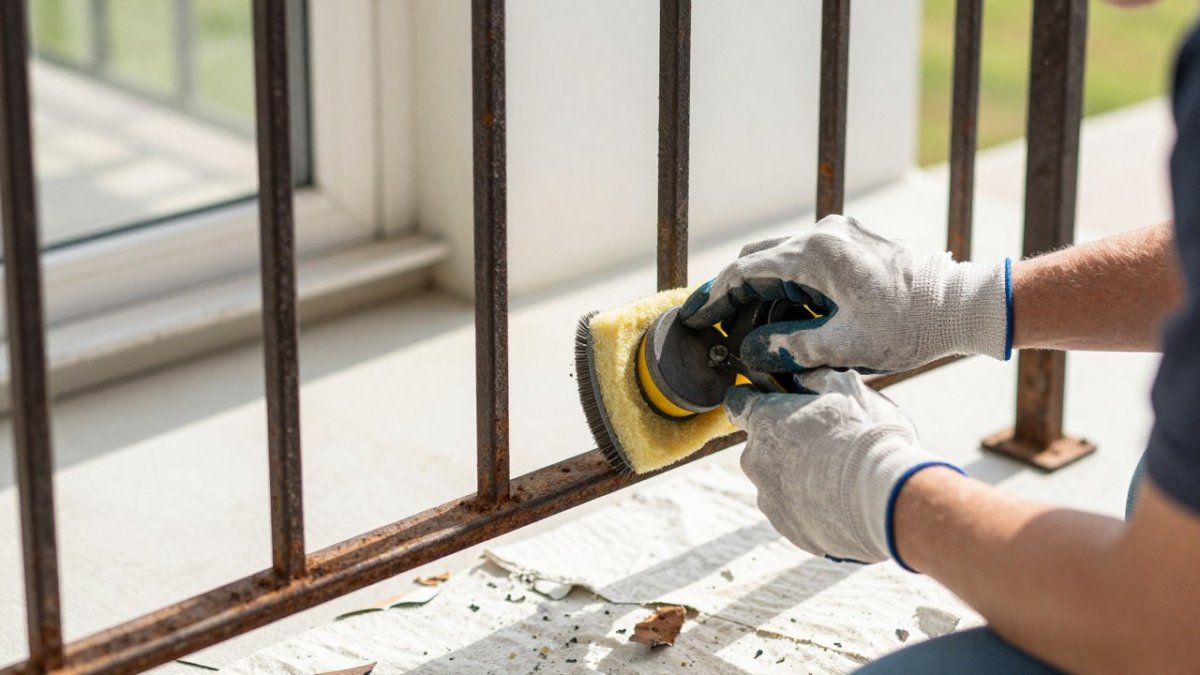
Removing Peeling Paint on Metal Railing Surfaces
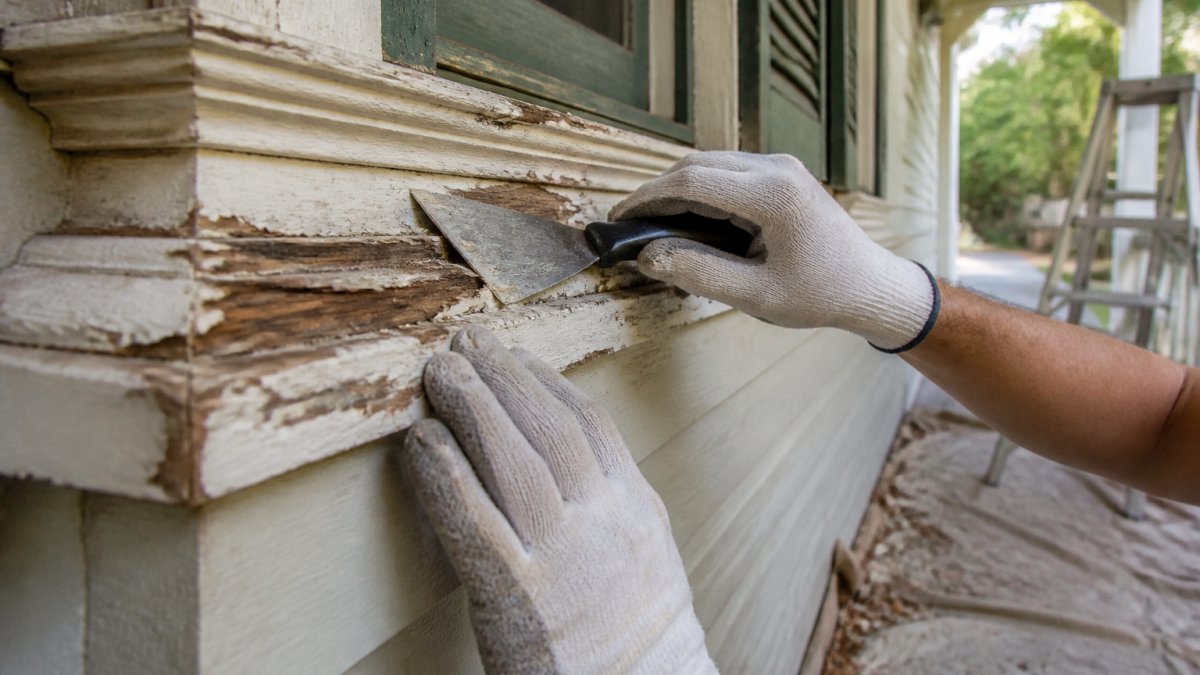
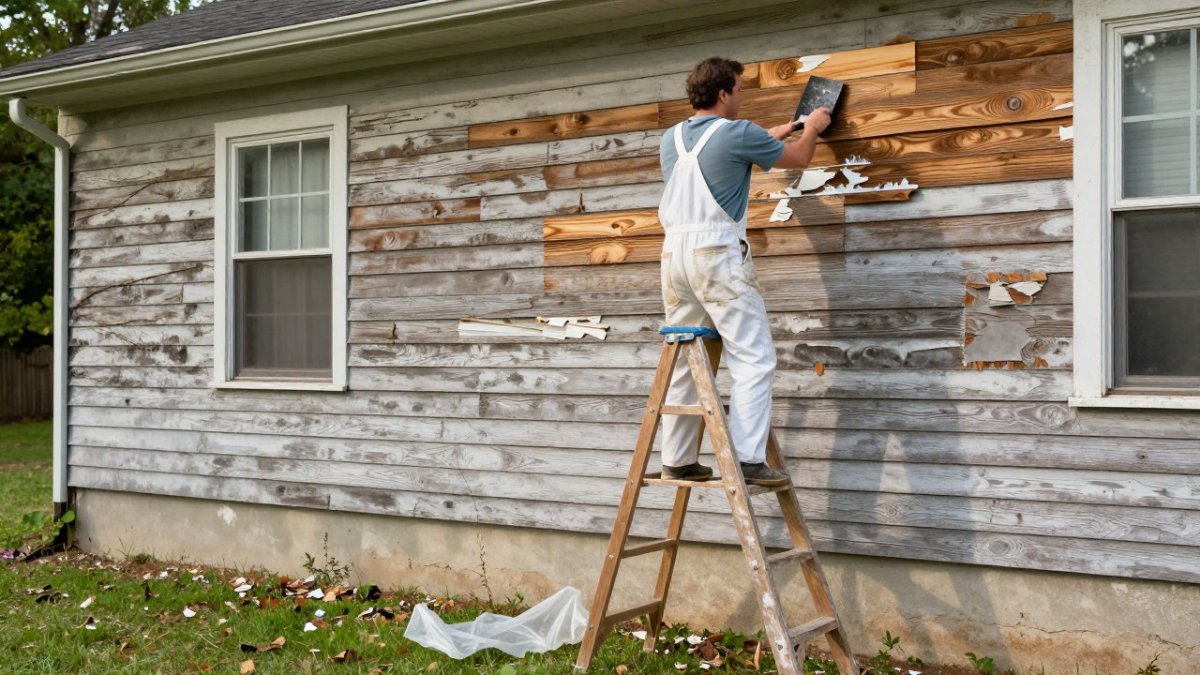
Start with a scraper and work with the grain of the rail. Push under every loose edge until the paint stops lifting.
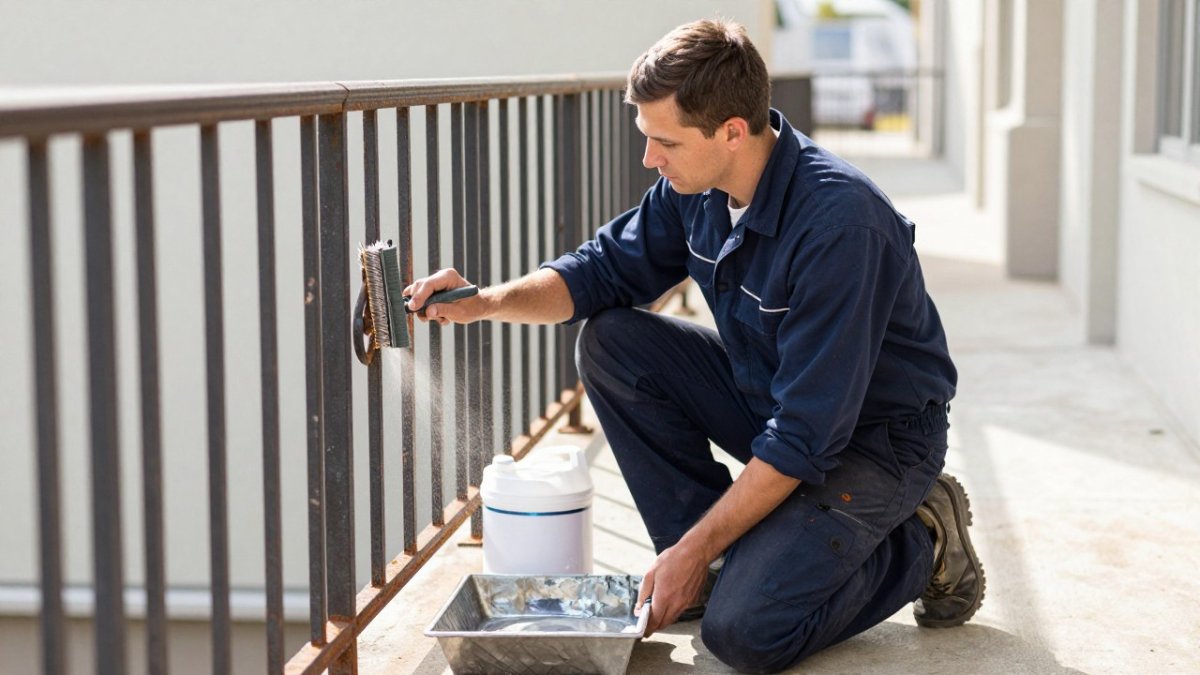
Then switch to a wire brush for the stubborn spots. Work the bristles into pitted areas where rust has eaten into the surface.
Peeling paint on metal railing usually means the previous coat went on over a dirty or damp surface.
Cleaning and Degreasing Before Primer
Wipe the whole railing with a rag dampened in paint thinner. This strips oils, fingerprints, and airborne grease that prevent paint adhesion.
Follow with a wash using a mild degreaser and clean water. Rinse thoroughly. Any sanding dust left behind will show through a thin coat.
Then let the railing dry completely. Paint over damp metal and you have rebuilt the exact conditions that caused the rust.
For a closer look at why this stage decides how long a coating lasts, see our guide on why professional exterior surface preparation makes all the difference.
The Best Tool for Sanding Metal Railings and Feathered Edges
A sanding sponge works well for curves and flexible sandpaper suits flat runs. Both let you feather edges without cutting into sound metal.
Feathering means tapering the edge of old paint so it blends flat into the bare surface.
Work in this order:
- Sand rough spots and rust spots down to bare metal.
- Feather every paint edge with a light, even stroke.
- Wipe the dust away with a tack cloth.
Use medium grit to remove material and finer grit to smooth, keeping pressure light. Heavy sanding on a thin rail can round off the profile and leave a wavy handrail.
Choosing the Best Paint for Metal Railings Outdoor Use
Metal railings outdoors are best protected by a system matched to surface condition: a primer chosen for bare, rusty, or previously coated metal, then an exterior topcoat formulated for metal. The primer does the rust protection; the topcoat handles weather, abrasion, and UV.
Product selection matters, because the right primer depends on what the metal is doing when you start.
Matching the Coating to the Surface Condition
Rust-inhibiting primer. Use this on bare steel and on any spot you sanded back to metal.
Rust-converting primer. Use this only on tightly adhered rust you cannot remove without damaging the rail. A converter chemically reacts with iron oxide to form a stable, paintable surface.
Direct-to-metal (DTM) coating. A DTM product bonds to bare or lightly rusted metal and can serve as both primer and topcoat in one step.
Compatibility and Recoat Rules
Check what is already on the railing before you buy. A simple test: rub a rag dampened with denatured alcohol on a hidden spot.
Respect the recoat window on the label.
For a full exterior repaint beyond the railings, our team also handles fence painting and solid-color wood fence staining across metro Atlanta.
Match the coating to what the metal is doing before you start.
| Coating | Best for | Key difference |
|---|---|---|
| Rust-inhibiting primer | Bare steel and spots sanded to metal | Corrosion-inhibiting pigments block moisture from steel |
| Rust-converting primer | Tightly adhered rust you cannot remove | Reacts with iron oxide to form a paintable surface |
| Direct-to-metal (DTM) coating | Bare or lightly rusted metal | Serves as primer and topcoat in one step |
| Exterior enamel or metal topcoat | Weather, abrasion, and UV protection | Acrylic easier to clean up; alkyd needs solvent cleanup |
Weather, Curing, and Preventing Rust From Returning
Weather decides whether a repaint lasts. Paint needs the right surface temperature, low moisture, and enough time to cure before rain or dew hits it. In metro Atlanta, summer heat and humidity are the usual culprits behind coating failure, and our article on exterior paint peeling and fading after a Georgia summer explains what those conditions do to a finish.
Conditions That Actually Matter
Surface temperature, not air temperature, governs how paint behaves.
Most coatings want surface temperatures between roughly 50°F and 85°F, with relative humidity below about 70 percent, but follow the label because formulations vary.
Morning is usually the better window for exterior metal. The surface is cooler, humidity is often lower, and the coating has the rest of the day to set before dew forms.
Recoat Windows and Full Cure
Recoat time is not cure time. Recoat windows are typically a few hours for waterborne products and longer for solvent-based enamels, but the film may not reach full hardness for days or weeks.
Watch out: applying a second coat after the recoat window has closed without scuffing the first coat can leave you with two layers that never bond as one film.
Why Rust Comes Back and How to Stop It
To keep rust from returning:
- Seal every edge and joint. Water collects at seams and screw heads first. A small brush and a bead of paint worked into the seam does more than a heavy coat on the flat.
- Reach the hard spots. Paint the backs of rails, the undersides, and the inside faces of decorative scrollwork. These are the surfaces water sits on and the ones most often missed.
- Check the railing each season. Touch up chips before they spread. A chip smaller than a coin is a five-minute fix; a rust bloom is a weekend job.
Safety matters here too. Wear gloves and eye protection when scraping and sanding, control dust when working on older railings, and work in a ventilated area when using solvent-based products. If the railing was painted before 1978, treat sanding dust as potentially lead-contaminated and follow lead-safe precautions. Follow the label instructions for disposal of solvents and paint waste.
Get a Free Estimate for Your Metal Railing Repaint
A railing repaint that lasts comes down to preparation, the right primer, and correct curing conditions. Miss any one and the rust comes back.
If you would rather hand the job to a crew that does this daily, Southern Perfection Painting Inc. uses trained W-2 employees, never subcontractors, and premium paints from Sherwin-Williams and Benjamin Moore. Every project is backed by a written workmanship warranty, with detailed, itemized quotes delivered within 48 hours.
Get started with Southern Perfection Painting Inc. and repaint your railings once, the right way. You can request a free estimate from our exterior painting team with no obligation.
Metal railings fail from the inside out, and the fix starts long before the first brushstroke.
Frequently Asked Questions
Can I paint over rusted metal without sanding?
You can paint over light surface rust with a direct-to-metal rust-inhibiting primer, but skipping sanding on flaking or pitted rust usually leads to early failure. Loose rust and peeling paint must come off first, or the new coat bonds to a layer that is already separating from the metal. Scrape, wire-brush, and sand rough spots, then clean the surface before priming. If rust has eaten into the metal, treat it with a rust converter before you repaint metal railings.
What is the best paint for metal railings outdoor?
Oil-based protective enamel and direct-to-metal (DTM) paints are commonly used outdoors. They form a harder film than latex and resist moisture, sun, and temperature swings. Look for a rust-inhibiting primer underneath and a topcoat rated for exterior metal. Two thin coats beat one thick coat every time. On a porch railing or metal fence, a satin or semi-gloss finish also sheds dirt and makes touch-ups easier down the road.
Why is paint peeling off my metal railing?
Peeling paint on a metal railing usually traces back to moisture trapped under the coating, poor surface prep, or painting over rust. If the metal was not cleaned and degreased, or if primer was skipped on bare spots, adhesion fails and the film lifts. Painting in high humidity or before the surface is fully dry causes the same result. Strip the loose paint, sand feathered edges, clean, and prime before recoating.
How many coats of primer and paint do metal railings need?
Plan on one coat of rust-inhibiting primer on bare or rusty spots and two thin coats of exterior metal paint. Spot-prime any area where you sanded to bare metal, then apply full topcoats once the primer cures per the label. Thin coats dry faster and bond better than heavy ones. Check the recoat window on the can, since some oil-based products need 24 hours between coats, and let the final coat cure fully before exposure to weather.