 How-to
Can Commercial Painters Work After Business Hours?
Last Updated: November 14, 2026
Quick Summary
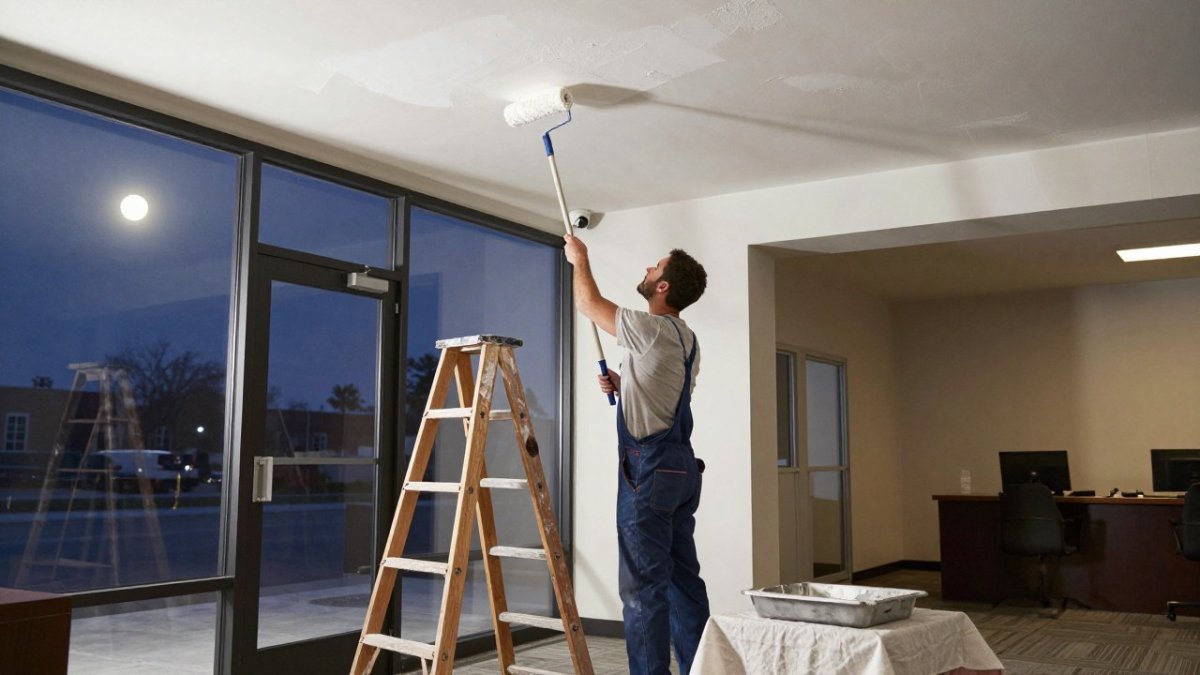
Yes, commercial painters can work after business hours, and most commercial projects depend on it. Off-hours work keeps your business operations undisturbed, though it typically comes at premium labor rates and requires high coordination with a facility manager contact.
- After-hours work keeps business operations undisturbed while standard-hours work interrupts or relocates them.
- Off-hours projects are compressed into nights and weekends but billed at premium labor rates.
- After-hours work suits occupied retail, offices, and clinics; standard hours fit vacant or low-traffic buildings.
- Schedule the highest-fume work for the emptiest hours and keep ventilation running through the night.
- Gather measurements, access details, and target dates before requesting bids on multiple retail spaces.
Table of Contents
- Commercial Painting While Business Is Open: How After-Hours Work Keeps You Operating
- Commercial Painting Project Scheduling: Phased, Zone-by-Zone, and Off-Hours Plans
- Commercial Paint Drying Time and Re-Entry: What to Expect
- Frequently Asked Questions
Commercial Painting While Business Is Open: How After-Hours Work Keeps You Operating
Yes, commercial painters can work after business hours, and most commercial projects depend on it. According to the U.S. Bureau of Labor Statistics Occupational Outlook Handbook, painter employment is projected to grow 3% from 2025 to 2035, and demand for flexible scheduling is rising with it. At Southern Perfection Painting Inc., we plan after-hours work around your operating hours, not the other way around. For property managers who need the service itself, our commercial exterior painting for offices, retail, warehouses, and HOA buildings covers Gwinnett County and metro Atlanta.
Your revenue day stays untouched while crews split a building into zones, finish each before moving on, and time work for empty spaces.
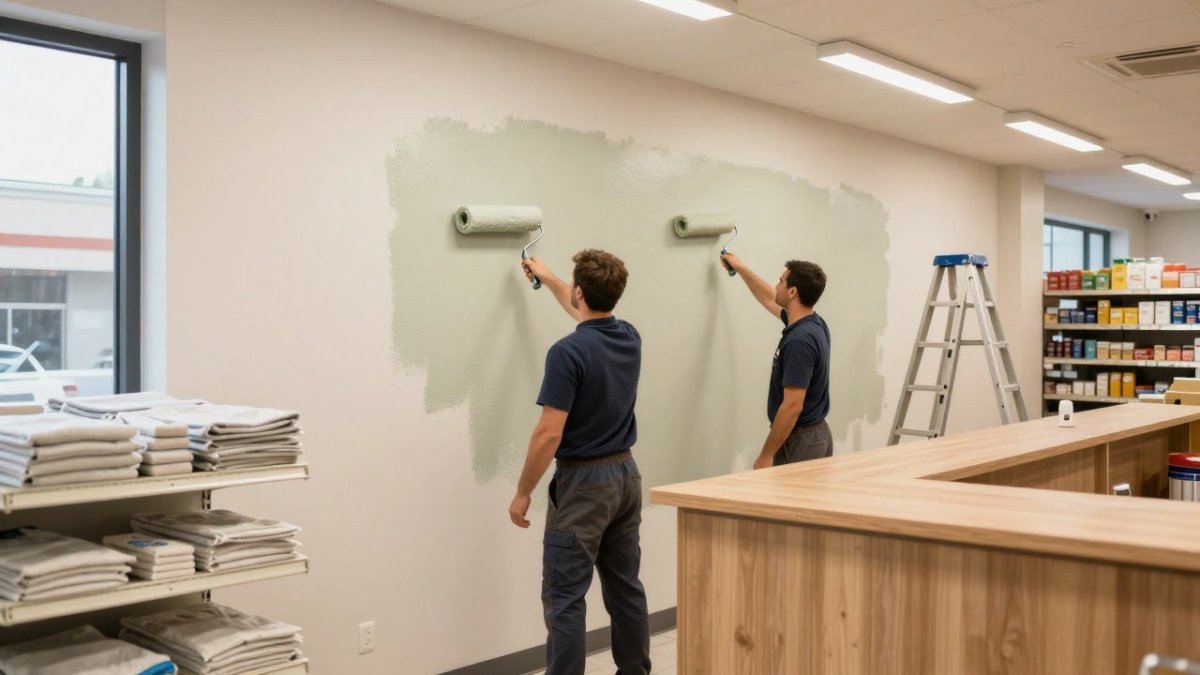
Off-hours work reduces conflicts with normal operations, but feasibility depends on project scope, space size, and access. A single office suite is straightforward; a 40,000-square-foot warehouse with racking in every aisle needs a phased plan. You can also see completed commercial projects across offices, retail spaces, warehouses, and multi-unit properties.
| Factor | Standard Hours | After-Hours Work |
|---|---|---|
| Business operations | Interrupted or relocated | Undisturbed |
| Labor cost | Standard rates | Premium rates |
| Project timeline | Longer, phased around traffic | Compressed into nights and weekends |
| Customer access | Restricted near work areas | Unaffected |
| Coordination needs | Moderate | High, requires a facility manager contact |
| Best for | Vacant or low-traffic buildings | Occupied retail, offices, clinics |
Commercial Painting Project Scheduling: Phased, Zone-by-Zone, and Off-Hours Plans
Project scope drives the calendar more than square footage does. Property managers planning multiple retail spaces should gather measurements, access details, and target dates before requesting bids; our guide on what to prepare for a commercial painting estimate walks through what to collect.
For property managers overseeing several locations, build the schedule around sales cycles, not the painter's convenience.
Commercial Paint Drying Time and Re-Entry: What to Expect
The safe re-entry time depends on the product, coat thickness, and ventilation. Always follow the manufacturer's data sheet.
- Ventilation. Air movement clears fumes faster. Open windows, run HVAC fans, and keep interior doors open where security allows.
- Surface preparation. Proper prep affects how evenly paint cures. Our professional prep work services explain what happens before the first coat goes on.
Paint fumes and indoor air quality are legitimate concerns in occupied buildings, especially for staff with respiratory sensitivities. Schedule the highest-fume work for the emptiest hours, keep ventilation running through the night, and give each zone a full airing before staff return.
Our practical guide on how often a commercial building should be repainted covers durability expectations by surface and use.
Your building does not have to go dark for a fresh coat. Southern Perfection Painting Inc. has 42 years of experience, uses trained W-2 employees, never subcontractors, uses premium paints from Sherwin-Williams and Benjamin Moore, and backs every project with a written workmanship warranty. We deliver detailed, itemized quotes within 48 hours.
Frequently Asked Questions
Can a business stay open while it is being painted?
Yes. Many commercial painting projects can be completed while your business remains open by using phased, zone-by-zone schedules or after-hours work. The feasibility depends on project scope and space size, so discuss your operating hours with your commercial painters to build a work schedule that keeps customer access and staff access flowing.
How long does commercial interior paint take to dry?
Drying time varies by product, but fast-drying commercial coatings often allow re-entry within a few hours. Always follow the manufacturer's re-entry guidance and allow for proper ventilation.
Do commercial painters work nights and weekends?
Scheduling depends on the project scope and space size, and not every project suits after-hours work. Ask your painting contractor about their availability for overnight or weekend painting, their safety precautions, and how they coordinate restricted access.