 How-to
How Do You Paint a Concrete Floor in a Small Warehouse?
Last Updated: November 17, 2026
Quick Summary
To paint concrete floor in a small warehouse, test the slab for moisture, hardness and oil, then clean, degrease and profile it before applying primer and two coats. Divide the floor into zones and coat one at a time so operations keep running. Most failures trace back to skipped prep rather than bad paint.
- New concrete needs about 28 days to cure before coating.
- For forklift traffic, mechanical profiling is generally the more durable choice.
- Most systems need two coats: the first seals, the second builds wear resistance.
- Foot traffic can resume after 24 hours, but forklifts should stay off until full cure.
- Fast-cure polyaspartic returns your warehouse to service sooner but costs more up front.
Table of Contents
- How to Prep and Paint Concrete Floor in a Small Warehouse
- What Type of Paint Is Best for Warehouse Floors?
- Warehouse Floor Paint Drying and Curing Time
- Frequently Asked Questions
How to Prep and Paint Concrete Floor in a Small Warehouse
Painting a concrete floor in a small warehouse means testing the slab, cleaning and profiling it, choosing a coating for your traffic, and applying it in stages so operations keep running. In practice, floor failures usually trace back to skipped prep rather than bad paint.
Step 1: Test the concrete before you buy a single gallon.
Test moisture with a 24-hour plastic sheet, hardness with a key scratch, and oil (beading water means grease remains). New concrete needs about 28 days to cure.
Step 2: Clear the floor and repair damage.
Move pallets and racking aside, sweep, patch cracks and spalls, and grind high spots flat.
Step 3: Clean and degrease.
Vacuum rather than sweep, scrub oil and grease with a concrete degreaser, and rinse thoroughly. Coating will not bond to oil.
Step 4: Profile the surface.
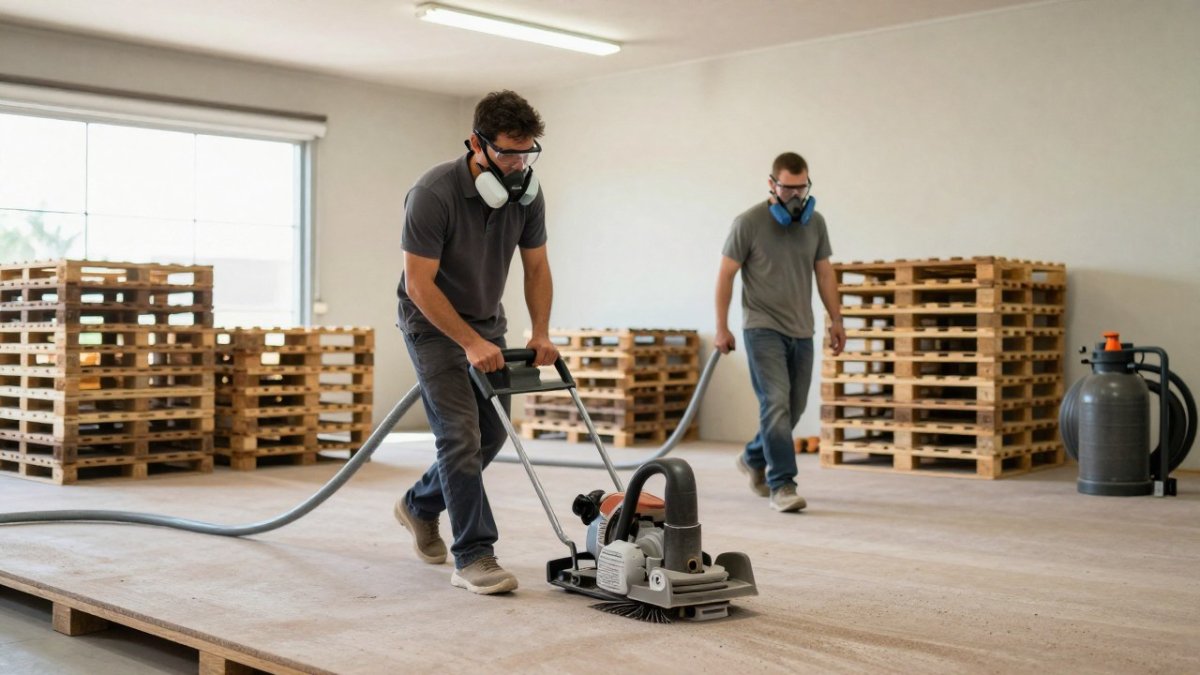
Acid etching or mechanical grinding opens the pores so the coating grips. For forklift traffic, mechanical profiling is generally the more durable choice.
Step 5: Prime, cut in, and roll.
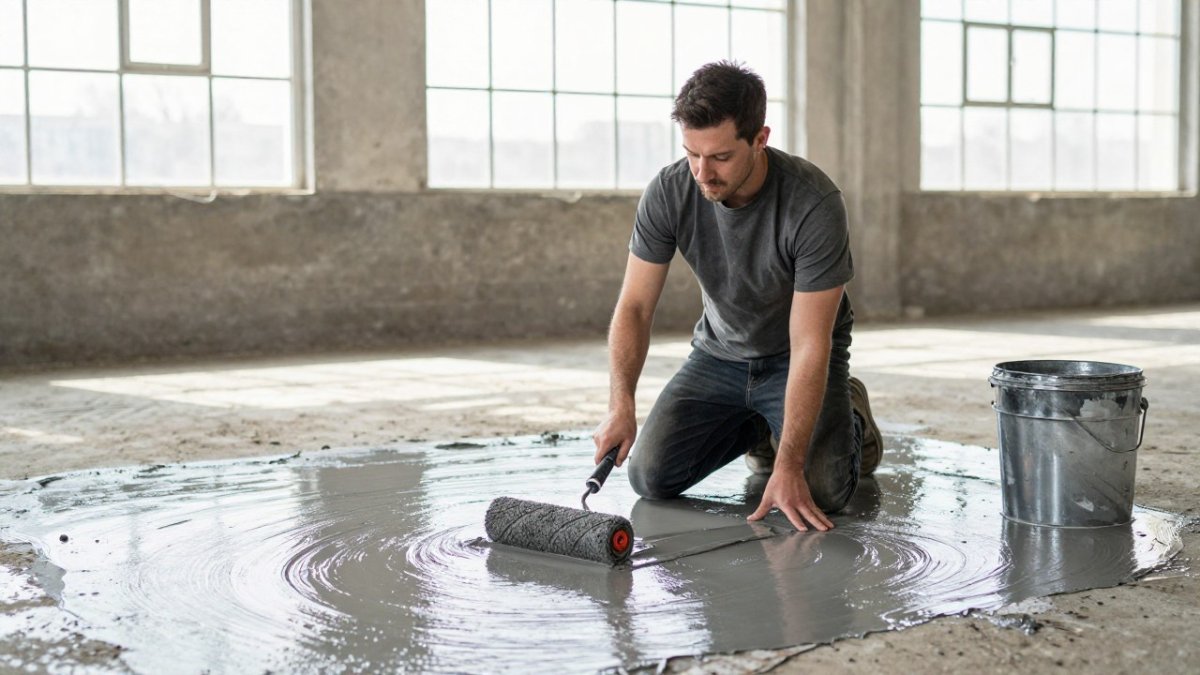
Apply primer and cure per the label. Brush edges along walls and racking legs, then roll the field in small sections to keep a wet edge.
Step 6: Apply the second coat.
Most systems need two coats: the first seals, the second builds wear resistance. Recoat within the window on the can.
Step 7: Plan the cure around your operation.
Divide the floor into zones and coat one at a time: move stock, coat, cure, then shift to the next zone. This is how you paint a working warehouse without shutting it down.
If you would rather hand the whole sequence to a professional crew, our warehouse painting services in Atlanta may be a good fit.
What Type of Paint Is Best for Warehouse Floors?
Epoxy and polyaspartic coating systems are commonly used on warehouse floors. Epoxy offers chemical resistance and durability; polyaspartic generally cures faster.
| Coating Type | Best For | Durability | Cure Speed |
|---|---|---|---|
| Epoxy | Forklift traffic, chemical spills | High | 24-48 hours |
| Polyaspartic | Fast turnaround, cold spaces | High | 4-6 hours |
| Polyurea | Heavy impact zones | Very high | 2-4 hours |
Cure Speed
Epoxy needs a primer on porous concrete or it dries patchy.
Premium products from Sherwin-Williams and Benjamin Moore are available for projects like this. For ceiling and floor choices together, see our guide to commercial painting ideas for ceilings and floors.
Concrete floor paint colors matter: light gray and beige reflect light and make the space feel larger and safer; safety yellow and white mark aisles and hazards; dark colors hide tire marks but absorb light.
For how we build a coating system from the slab up, see our concrete protection system. For exterior slabs, our exterior concrete and masonry coating service matches the coating to the substrate.
Warehouse Floor Paint Drying and Curing Time
Most warehouse coatings dry to the touch in 4 to 12 hours, but full cure takes 3 to 7 days. Foot traffic can resume after 24 hours; forklifts and pallet jacks should stay off until full cure.
Cold slabs slow curing, and high humidity can haze the finish or slow the bond. Ventilate and stay above the minimum temperature on the product data sheet.
If downtime is your main worry, painters can often work after hours so the floor cures overnight. Our team explains the scheduling in can commercial painters work after business hours.
Fast-cure polyaspartic costs more up front but returns your warehouse to service sooner; slow-cure epoxy costs less but can cost a day or two of operation.
Painting a warehouse floor is a preparation job disguised as a painting job. Get testing, cleaning, and profiling right and the coating holds up for years; cut corners and you will recoat in eighteen months.
Southern Perfection Painting Inc. has served metro Atlanta for 42 years. Our crews are trained W-2 employees, never subcontractors, and we back every project with a written workmanship warranty. Premium products from Sherwin-Williams and Benjamin Moore are used, and detailed, itemized quotes are delivered within 48 hours.
Get started with Southern Perfection Painting Inc. and request a free estimate. Request your free estimate today.
Frequently Asked Questions
Can you paint straight onto a concrete floor?
No. New or bare concrete needs cleaning, degreasing, and a profile so the coating can grip. A simple water-drop test shows whether the slab absorbs moisture; if water beads, the surface is sealed or contaminated. Repair cracks and spalls, then apply a compatible primer before the first coat. Skipping prep is the main reason paint peels, especially in a small warehouse where forklift traffic concentrates on the same lanes.
What is the best type of paint to use on concrete floors?
For a small warehouse, epoxy or polyaspartic coating systems are commonly chosen over standard latex concrete floor paint for durability and chemical resistance. Epoxy handles abrasion and easy cleaning; polyaspartic cures faster and resists yellowing. Match the system to your traffic: light storage may need a single-component coating, while forklifts and pallet jacks call for a two-part epoxy with a topcoat. Confirm compatibility with your slab's moisture level before buying.
How long does warehouse floor paint take to dry and cure?
Dry times vary by product and conditions. Epoxy typically allows foot traffic in 12 to 24 hours and vehicle traffic in 3 to 7 days, while polyaspartic can accept light traffic in a few hours. Full cure takes several days. Plan phased application around warehouse operations: coat half the floor, move racking, then finish the rest. Follow the product data sheet for ventilation and minimum application temperature.